Help! My Therapy Client Is Quiet: What Should I Do as a Therapist?

Starting out as a therapist comes with a lot of moments that can bring up self-doubt. You are learning how to build rapport, choose interventions, manage the flow of a session, and sit with uncertainty, often all at once.
One of the most common challenges new therapists talk about is the quiet client.
Maybe you ask an open-ended question and hear, “I don’t know.” Maybe your client gives short answers, avoids expanding, or spends most of the session in silence. You might leave the room wondering if you missed something, if the client is disengaged, or if you are somehow not being a “good enough” therapist. If you have experienced this, you are not alone.
Quiet therapy clients are not necessarily difficult clients, resistant clients, or clients who are not benefiting from therapy. Silence is communication too. Learning how to understand and work with quiet clients is a skill that develops over time, and it often starts with shifting how we view silence in the therapy room. In this blog post, we’ll explore how to better understand quiet clients, work with silence in the therapy room, and build confidence in navigating these moments as a new therapist.
Why Some Clients Are Quiet in Session?
When a client speaks very little, our first instinct can sometimes be to assume something is wrong. We may interpret silence as discomfort, avoidance, a lack of connection, or a sign that therapy is not working. However, silence can communicate many different things depending on the client, the moment, and what is happening internally for them.
Before responding to silence, it can be helpful for therapists to consider what type of silence they are witnessing. While every client’s experience is unique, quiet moments in therapy often fall into three categories: dysregulated quiet, protective quiet, and regulated quiet. Understanding the difference between these types of silence can help therapists respond with curiosity rather than jumping to assumptions about what a quiet client means or needs.
Dysregulated quiet
Dysregulated quiet happens when a client’s nervous system becomes overwhelmed, making it difficult to access words, thoughts, or emotions in the moment. This type of silence is often connected to stress, anxiety, fear, or trauma responses. The client may not be choosing to stay quiet, but instead may be experiencing a protective response from their nervous system.
Dysregulated quiet may look like:
A client becoming silent after discussing a painful memory or emotionally charged topic
A client appearing frozen, disconnected, or unsure how to answer a question
A client saying “I don’t know” repeatedly because they feel overwhelmed or unable to access what they are feeling
For some clients, especially those with trauma-related experiences, silence can be a way their nervous system attempts to create safety. They may need more time, grounding, and support before they can continue sharing.
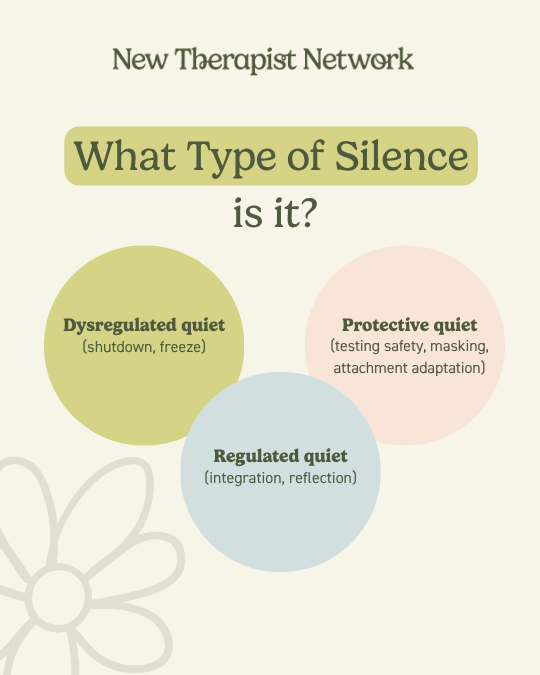
Protective quiet
Protective quiet occurs when a client uses silence as a way to protect themselves. This may happen when vulnerability feels unfamiliar, unsafe, or overwhelming. For some clients, therapy is the first space where they are being asked to openly discuss their emotions, relationships, or experiences.
Protective quiet may look like:
A client giving short answers because they are unsure how much they want to share
A client avoiding certain topics or changing the subject when conversations feel too vulnerable
A client waiting to build trust and connection before opening up more fully
This type of silence does not necessarily mean a client is resistant or unwilling to participate. They may be carefully deciding what feels safe to share and learning that therapy can be a space where they do not have to have all the answers.
Regulated quiet
Not all silence is a sign that something is wrong. Regulated quiet can be a healthy part of therapy and may reflect a client taking time to think, reflect, or connect with their internal experience. Some clients naturally communicate with more pauses, while others may need extra time to process before responding.
Regulated quiet may look like:
A client taking a thoughtful pause before answering a meaningful question
A client sitting comfortably with silence while reflecting on their emotions
A client appearing calm and engaged, even when they are not speaking
For some clients, silence can actually be a sign of trust. They may feel comfortable enough in the therapeutic relationship to take their time rather than feeling pressured to fill every moment with words.
Recognizing the difference between dysregulated, protective, and regulated quiet can help therapists respond more intentionally. Instead of asking, “Why isn’t my client talking?” we can begin to ask, “What might this silence be communicating?”
This also naturally sets up the next section (working with quiet clients/interventions) because it shifts the therapist from fixing silence → understanding silence.
The Therapist’s Role: Staying Grounded and Present
One of the hardest parts of working with quiet clients is managing our own discomfort.
When a session becomes quiet, therapists may feel pressure to fill the space. We might ask more questions, introduce another topic, or quickly move toward an intervention because we worry the session is not going well. This is a very normal experience, especially for newer therapists.
However, learning to tolerate silence is an important part of developing confidence in the therapy room. Before responding, it can be helpful to pause and ask yourself:
“Am I moving because my client needs something right now, or because I feel uncomfortable with the silence?”
Sometimes the most therapeutic thing we can offer is simply staying present.
A calm therapist communicates safety. When clients experience that they do not have to perform, impress, or provide the “right” answer, they may feel more comfortable slowly opening up. Building rapport in therapy is not only about asking the perfect questions. It is also about creating an environment where clients feel accepted exactly as they are.
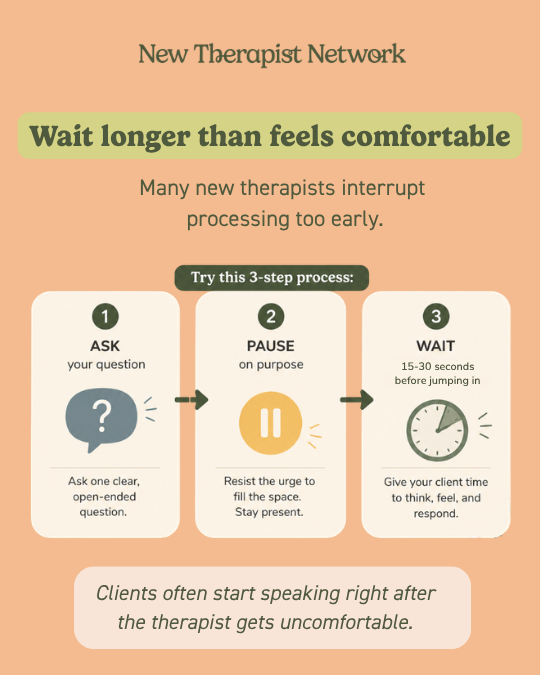
The Intentional Silence Intervention in Therapy Session
One way therapists can become more comfortable working with quiet moments is by practicing intentional silence. Instead of rushing to fill a pause, this practice encourages therapists to slow down, stay present, and create more space for the client to respond.
1. Ask your question
Start by offering one clear, open-ended question. Avoid adding multiple questions or extra prompts right away, as this can make the client feel pressured to respond quickly.
2. Pause on purpose
After asking your question, allow the silence to exist. Notice the urge to jump in, rephrase the question, or fill the space, and practice staying present instead.
3. Give your client time to respond
Try waiting 15–30 seconds before saying anything else. This gives your client time to think, connect with their emotions, and find the words they want to share.
Often, clients begin speaking right after the therapist becomes uncomfortable with the silence. By practicing intentional silence, therapists can learn to tolerate these moments and create a space where clients do not feel rushed to respond.
Evidence-Based Ways to Support Quiet Clients
Working with quiet clients does not mean leaving the entire session open and hoping the client starts talking. Many clients benefit from gentle structure, clear expectations, and supportive guidance. Here are some approaches that can help improve client communication in therapy.
Use gentle, open-ended prompts
Broad questions like “What brings you in today?” can sometimes feel overwhelming, especially for clients who already struggle to find words.
Instead, try narrowing the focus:
“What has been taking up the most space in your mind lately?”
“What feels important for us to talk about today?”
“Where would feel easiest to start?”
These questions still allow the client to guide the session while making the starting point feel more manageable.
Offer choices
Some clients freeze when faced with unlimited possibilities. Offering options can create a sense of safety without taking control of the session.
For example:
“Would it feel better to talk about something that happened this week, something you have been feeling lately, or something that has been on your mind for a while?” Giving choices can make therapy feel more collaborative and less intimidating.
Use reflections instead of constant questions
When therapists are nervous about silence, sessions can sometimes become a series of questions. Instead, try reflecting what you notice.
You might say: “I noticed you paused when you mentioned that.” or: “It seems like this topic feels a little difficult to put into words.”
Reflections show curiosity and allow clients to explore without feeling like they are being interviewed.
Pay attention to the here-and-now
Sometimes the most meaningful information is happening within the session itself. If appropriate, gently naming the moment can create opportunities for deeper exploration:
“I notice we have been sitting quietly for a bit. I’m curious what this moment feels like for you.”
This does not mean forcing the client to explain themselves. It simply invites awareness.
Gentle Prompts That Encourage Expression
When a client is quiet, therapists often feel pressure to come up with a brilliant intervention or question. Usually, simple and genuine curiosity goes much further.
Some gentle prompts to try include:
“Take your time. There is no rush.”
“I’m curious what you’re noticing right now.”
“Sometimes it can be hard to find words for these things.”
“Would it help to start with what happened, or how it felt?”
“What are you noticing in your body as you talk about this?”
For some clients, especially those who struggle to identify emotions, incorporating somatic awareness can be helpful. Inviting clients to notice physical sensations, tension, or changes in their body can provide another pathway to understanding their experiences.
Not every client will access their emotions through talking first. Sometimes awareness comes through noticing.
What Not to Do With Quiet Clients
When sessions feel quiet, it is easy to fall into habits that unintentionally create more pressure.
Try to avoid:
❌ Filling every silence immediately.
A pause gives clients time to think and process. Silence does not always need to be solved.
❌ Assuming the client is not engaged.
Quietness can mean many things. Try staying curious instead of jumping to conclusions.
❌ Asking endless questions.
A long series of questions can make clients feel like they are being assessed rather than supported.
❌ Taking responsibility for carrying the entire session.
Therapy is a shared process. The client does not need you to perform every moment.
When Silence Is Therapeutic
Silence can feel uncomfortable, but it can also be meaningful. For some clients, therapy may be the first place where they experience being accepted without needing to entertain, explain, or justify themselves.
A quiet moment can allow someone to:
process an emotion
notice what is happening internally
gather their thoughts
experience safety in the relationship
The goal is not to make every silence disappear. The goal is to become curious about what the silence may be communicating.
Continue Learning as a Therapist With New Therapist Network
If you are struggling with quiet sessions, you are not the only therapist who has wondered, “What do I do when my client barely talks?”
New Therapist Network’s live replay, Working With Quiet Clients: Moving Beyond Verbal Content, explores how to move beyond focusing only on what clients say and build confidence working with what happens beneath the surface.
The replay offers practical strategies for staying grounded, understanding silence, and supporting clients who may communicate in quieter ways.
NTN has also shared additional resources on quiet clients through our Instagram, including conversations around reframing silence, building confidence in sessions, and staying connected when clients are not offering a lot of verbal content.
Interested is NTN is a good fir for you? We recommend to start with our 3-day free trial, no commitment, just a chance to check the platform and its perks!
TLDR
Working with quiet clients is one of those experiences that can feel uncomfortable early in your career, but it can also become one of the places where you grow the most as a therapist.
A quiet session does not mean you failed. A client using fewer words does not mean there is no therapeutic progress happening. Over time, you will learn that therapy is not only built through conversation. It is built through safety, curiosity, trust, and the ability to sit with another person’s experience without rushing them. Sometimes the most powerful thing you can communicate is: “I’m here with you, and we don’t have to rush.”
References
Daniel, S. I. F., Folke, S., Lunn, S., Gondan, M., & Poulsen, S. (2018). Mind the gap: In-session silences are associated with client attachment insecurity, therapeutic alliance, and treatment outcome. Psychotherapy Research, 28(2), 203–216. https://doi.org/10.1080/10503307.2016.1177673
Lane, R. C., Koetting, M. G., & Bishop, J. (2002). Silence as communication in psychodynamic psychotherapy. Clinical Psychology Review, 22(7), 1091–1104. https://doi.org/10.1016/S0272-7358(02)00144-7
Regev, D., Chasday, H., & Snir, S. (2016). Silence during art therapy: The client's perspective. The Arts in Psychotherapy, 48, 69–75. https://www.sciencedirect.com/science/article/abs/pii/S0197455615300150