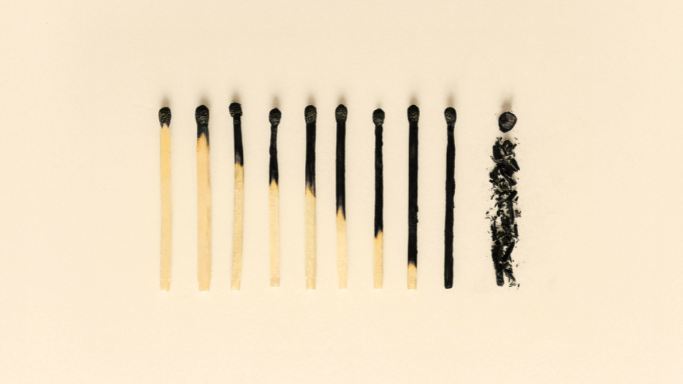
You know what’s one thing they never warned you about in Grad school? The drive home from work.
You know the one. You’re sitting at the red light, stuck in your thoughts replaying something a client said, and you can’t quite figure out why you can’t just check out. You didn't lift anything heavy today, you didn't run a marathon, you mostly just sat, and listened. And yet, you're wiped.
That exhaustion isn’t “just part of the job.” It’s part of the very real, and often invisible, emotional labour of being a therapist
For student therapists, newly licensed clinicians, and even those ten years into practice who still wonder why “just talking to people” can leave them so depleted, this experience is incredibly common. Being a therapist is deeply meaningful work, and it can also come with some very real emotional demands.
A lot of those demands happen quietly. Therapists are constantly regulating their own emotions, attuning to clients, holding space for difficult experiences, and providing thoughtful interventions—all while staying present for the person sitting across from them. That’s a lot.
In this post, we’re going to walk you through what that emotional labour actually looks like, why it tends to hit hardest in the early years, and what you can do about it before it quietly turns into burnout.
What Emotional Labour Looks Like for Therapists

Emotional labour isn't just what it costs to be a "caring or empathetic person." It's a specific kind of work, one that gets exhausting fast when it's carried without much acknowledgment or support. It means constantly managing your own internal state (your reactions, your discomfort, the urge to fidget or flinch or cry) so you can stay present for someone else. Weirdly enough, the term comes from a 1980s case study on flight attendants, back when airlines trained their staff to manage their real feelings and smile through the turbulence no matter what was going on inside. Your version doesn't come with a beverage cart, it comes with someone's grief or trauma, for fifty minutes straight
It's mostly invisible, even to you. You're not consciously thinking, “I'm doing emotional labor right now.” You're just doing your job. But underneath that are dozens of tiny adjustments: softening your face, steadying your voice, noticing your own reaction, staying curious instead of jumping in to rescue, and figuring out what the client needs from you next. None of that shows up in a session note. All of it takes energy.
And experiencing that emotional weight doesn't make you too sensitive for this work. Caring deeply about your clients and being affected by what you hear can coexist with being a skilled, boundaried therapist. You shouldn’t stop feeling, but you must learn how to feel without carrying all of it with you.
Why New Therapists Feel It More Intensely
If this is hitting you harder than it seems to hit your supervisor, think again—there's a good chance they've been here too. New therapist stress is common, and it's not a sign you're not cut out for this. There are a few reasons why the emotional demands of the work might feel especially intense in the beginning:
You're still learning how to regulate yourself while staying present. You're noticing your reactions, thinking about what to say next, and trying to remain attuned to your client—all at once.
You're holding two jobs in your head.Part of you is with the client; the other is asking, Am I doing this right? That constant internal monitoring is exhausting.
You're meeting the reality behind the textbook. Learning about trauma, grief, abuse, or crisis in class is very different from sitting across from the person telling you their story.
Your own history is in the room too. Some stories will hit closer to home. Learning to notice when something belongs to the client—and when something belongs to you—is part of the work.
The Hidden Pressures You Don’t Learn in Grad School
Grad school teaches theory, technique, and how to make sense of a client's situation on paper. It rarely teaches you how to live inside your own body after a full day of holding other people's emotions. A few things that tend to surprise people in year one:
You can't talk about your day like everyone else can.Confidentiality can mean coming home carrying something heavy without being able to unload it over dinner.
Emotional labor doesn't clock out at 5 p.m.A client's comment can resurface at 11 p.m., uninvited. You might replay what you said, wonder how they're doing, or suddenly remember a difficult moment from the session.
You are the instrument.Most jobs have external tools: software, equipment, a spreadsheet. Yours is you— Your attention, presence, empathy, and ability to stay grounded are part of the work. When you're running low, there's no separate piece of equipment to swap in.
You're expected to know what you're doing while you're still learning how to do it.You can know the theory and still sit across from a real human being thinking, What the hell do I say now? Clinical confidence comes with practice, supervision, reflection, and plenty of Was that okay? along the way.
Signs You’re Carrying Too Much Emotional Weight as a Therapist
None of these signs mean you're doing something wrong. Think of them as information—your mind and body letting you know that something might need your attention.
A few things you might notice:
Dread before certain sessions.Not because you dislike the client, but because part of you already knows this hour is going to take a lot out of you.
Irritability outside of work. You're snapping at your partner, annoyed by tiny things, or generally feeling a little less like yourself.
Clients following you home (mentally, of course). You're thinking about a session over dinner, in the shower, or when you're trying to fall asleep.
Feeling numb or checked out.Sessions that would normally engage you start to feel like you're going through the motions.
You're physically wiped.Tight shoulders, headaches, a clenched jaw, or the kind of exhaustion that makes you wonder, How am I this tired? I literally sat all day.
This kind of emotional fatigue in therapy work can happen, especially during demanding seasons. The important part is noticing when a hard day starts becoming your everyday.
Evidence-Informed Ways to Navigate Emotional Labour as a Therapist
So, how do therapists actually manage emotions without eventually running on fumes?
We're not talking, light a candle and put on a face mask and call it “self-care.” We're talking about small practices that help you actually process and transition out of the work.
Name what's happening. Even a simple I'm noticing that session really activated me creates a little space between you and the feeling instead of just carrying it around.
Reset between sessions. Put your feet on the floor. Unclench your jaw. Take a few slow breaths. Get up and shake out your arms. Thirty seconds counts. The goal is to interrupt some of that tension before it stacks up across six sessions. Kiki chat with your collegues or make a little walk if it’s not -30 outside.
Actually debrief the hard ones. Jot down what came up for you, talk it through in supervision, or check in with a trusted colleague when appropriate. Sometimes your brain needs a clearer signal that the session is over.
Use supervision for the messy stuff. Not just here's what my client presented with and here's the intervention I used. Bring the session you can't stop thinking about. Bring the client who frustrates you. Bring the moment you felt yourself wanting to rescue, fix, cry, shut down, or say the "perfect" thing. That's useful clinical information too.
Find people who get it. Formal supervision matters, but so does having other therapists around who understand the weirdness of this job without needing the whole backstory. Peer consultation and community can make something that feels very isolating feel a lot more normal.
At The New Therapist Network, we have a dedicated peer pod focused on burnout and fatigue, where we host challenges and live events to talk about it together - because only another therapist truly understands a therapist’s exhaustion.
How to Build Sustainable Emotional Boundaries

Strong therapist boundaries aren't about caring less. They're what allow you to keep caring without giving every client unlimited access to your emotional capacity.
A few places to start:
Know your actual capacity. If four high-intensity sessions in a row leave you completely depleted, pay attention to that when building your caseload.
Create an end-of-work ritual. Change your clothes, take a walk, blast music on the drive home, sit quietly for five minutes—whatever tells your brain, we're done now.
Get comfortable not responding immediately.Let me think about that and get back to you is a complete sentence. Being a good therapist doesn't mean being available around the clock
Protect the boring basics. Sleep, food, movement, relationships, hobbies, and time when you are not "the therapist." They're not rewards you earn after you've taken care of everyone else.
Boundaries aren't walls made to shut your clients out. They're part of what makes it possible to stay present with them without taking everything home.
When Emotional Labour Turns Into Burnout
Emotional labor is part of doing therapy. Therapist burnout can happen when the demands of doing that work keep outweighing your opportunities to recover.
Some days you're running on empty before your first session even starts. You're more detached or cynical than usual. The work that once felt meaningful feels flat. Or you're doing objectively good work and still walking away thinking, I'm terrible at this.
Compassion fatigue can overlap with this too, particularly when you're repeatedly exposed to trauma, grief, crisis, or intense emotional distress.
Here's the tricky part: burnout rarely shows up all at once. Sometimes it creeps in so gradually that you don't realize how depleted you've become until exhaustion, dread, or numbness starts feeling normal.
That's the moment to take seriously, not push past it. Talk to your supervisor. Revisit your caseload. Use your own therapy. Connect with peers. Something may need to change, and noticing that is part of practicing sustainably.
Final Thoughts for New Therapists
If you've been nodding along while reading this, here's what we hope you take away: feeling the weight of this work doesn't mean you're bad at it.
The goal isn't to become so experienced that nothing affects you. It's learning how to stay compassionate and connected without carrying every session home with you.
And you shouldn't have to figure that out alone.
The New Therapist Network is built specifically for this stage of your career, whether you're still in school, doing your practicum, or newly out on your own. It's a place where imposter syndrome and the "wait, am I doing this right?" feeling get to be said out loud, then actually addressed. There’s live workshops you can drop into, real tools you can bring straight into your next session, and other therapists in the room who remember exactly what this stage feels like.
If the emotional weight of the work has been feeling particularly heavy, NTN's Burnout & Sustainability Peer Pods offer a space to work through it alongside other therapists, through peer support, practical resources, and challenges designed around building a more sustainable relationship with the work.
Because therapists need places to put things down, too.
References
https://wellnessmattershealth.com/emotional-burden-of-being-a-therapist/
https://www.sciencedirect.com/science/article/pii/S2212144724000048
https://www.psychologytoday.com/ca/blog/philosophy-and-therapy/202407/emotional-labor-in-psychotherapyhttps://www.sciencedirect.com/science/article/pii/S2212657022000253
https://ensorahealth.com/blog/7-reasons-therapists-burn-out-and-what-you-can-do-about-it/
https://garrettlafosse.com/surprising-facts-emotional-labor-sources/
https://www.verywellmind.com/what-is-emotional-labor-5193184
https://onlinelibrary.wiley.com/doi/10.1002/capr.12837
https://www.newtherapistnetwork.ca